KS1 and KS2: a guide to primary learning and SATs
What children learn from Year 1 to Year 6, how they are assessed, what SATs scores mean and the simple, proven ways parents can help at home.
How primary education is organised in England
Children in England start school in Reception, the final year of the Early Years Foundation Stage (EYFS), in the September after they turn four. Primary school then runs through two key stages: Key Stage 1 (Years 1 and 2, ages 5 to 7) and Key Stage 2 (Years 3 to 6, ages 7 to 11).
What children learn in each year is set out in the National Curriculum, published by the Department for Education. Its programmes of study list what should be taught in each subject, year by year in English and maths and by key stage in most other subjects. Academies and free schools do not have to follow it exactly, but most use it as the basis of their curriculum.
Learning in KS1 focuses on secure foundations: reading through phonics, early writing, counting, number bonds and place value. KS2 builds on those to fluent reading and extended writing, the four operations with larger numbers, fractions and decimals, and a wider range of subjects such as history, geography and a modern foreign language.
Statutory assessments in primary school
Children in England take a small number of national checks during primary school. They are designed to show how well children and schools are progressing, not to label individual children.
| Year | Assessment | What it involves |
|---|---|---|
| Reception | Reception baseline assessment | A short, practical check in the first weeks of school on early language, literacy and maths. |
| Year 1 | Phonics screening check | Reading 40 words aloud to a teacher, including some made-up words, to check phonics decoding. Children who do not meet the standard retake it in Year 2. |
| Year 2 | KS1 assessments (optional) | Schools may use KS1 tests in reading and maths to inform teacher assessment; since 2023–24 they are no longer statutory. |
| Year 4 | Multiplication tables check | An on-screen check of 25 multiplication questions up to 12 × 12, with six seconds to answer each. |
| Year 6 | KS2 SATs | Tests in English reading, grammar, punctuation and spelling, and maths, sat in May. Writing is assessed by teachers. Some schools also take part in science sampling. |
Year 6 SATs explained: papers and scaled scores
KS2 SATs are sat over a week in May. Children take a reading paper, two grammar, punctuation and spelling papers (a questions paper and a spelling test, often called SPaG), and three maths papers: one arithmetic paper and two reasoning papers.
Results are reported as scaled scores from 80 to 120. A score of 100 or more means a child has met the expected standard; a score of 110 or more is often described as working at greater depth, though that label officially applies to teacher-assessed writing. Scores are shared with parents in July, before children leave primary school.
SATs are mainly a measure of how well schools are doing. Secondary schools may use them alongside their own assessments, but they do not decide which secondary school a child attends, and children do not pass or fail them.
KS1 and KS2 subjects
These are the primary subjects on our UK curriculum map, each researched from the Department for Education’s National Curriculum programmes of study and statutory guidance. Religious education is taught through locally agreed syllabuses, and relationships and health education is statutory in all primary schools.
Sciences 1 subject · Department for Education
Maths and statistics 1 subject · Department for Education
English and languages 2 subjects · Department for Education
Humanities and social sciences 3 subjects · Department for Education, Religious Education Council of England a, Qualifications and Curriculum Authority , Rutland SACRE, Ealing SACRE
Computing, engineering and technology 2 subjects · Department for Education
Medicine, health and care 2 subjects · Department for Education
Arts, media and performance 2 subjects · Department for Education
What children learn in each year of primary school
Year 1
Phonics and early reading, forming letters correctly, counting to 100, number bonds to 20, simple addition and subtraction, and seasonal changes and plants in science.
Year 2
Reading with growing fluency, writing in longer sentences, times tables for 2, 5 and 10, place value to 100, simple fractions, and living things and habitats.
Year 3
Reading for meaning, paragraphs in writing, the 3, 4 and 8 times tables, numbers to 1,000, fractions, and rocks, light and forces in science.
Year 4
Formal written methods, all times tables up to 12 × 12 for the multiplication check, decimals, and electricity, sound and states of matter.
Year 5
More complex texts and writing for different purposes, multiplying and dividing larger numbers, fractions, decimals and percentages, and Earth and space.
Year 6
Preparing for SATs: reading comprehension, grammar, all four operations, ratio and algebra, and evolution, inheritance and the circulatory system.
How to help your child learn at home: methods that work
The same principles that help teenagers and adults revise work for younger children too, in smaller doses and with plenty of encouragement.
Little and often
Ten to fifteen minutes a day is more effective than an hour at the weekend, and much easier to keep up. Short sessions also keep practice positive.
Read together every day
Reading aloud, then talking about the story, builds vocabulary and comprehension, the skills tested in the KS2 reading paper and needed in every subject.
Make recall a game
Quick-fire questions on times tables, spellings or facts, in the car, at dinner or with flashcards, are retrieval practice in disguise.
Come back to things
Revisit a skill a day later, then a few days later, then the following week. Spacing practice out is how facts like times tables become automatic.
Let them explain
Ask your child to teach you what they learned. Explaining strengthens memory and shows you where they are unsure.
Use real life
Cooking, shopping and travel are full of measuring, money, time and reading. Everyday maths makes abstract ideas concrete.
Keep SATs calm
Familiarity with question styles helps, but cramming does not. A few practice questions a week in Year 6 is plenty, alongside plenty of reading.
Praise effort and strategy
Children who believe they can improve through practice persist longer. Praise the trying, not just the answer.
Supporting KS2 maths and English
Maths
Fluency with number facts is the foundation of everything else in primary maths. Aim for instant recall of number bonds and times tables, then build confidence with written methods for the four operations. Fractions, decimals and percentages are where many children wobble in Years 5 and 6; using pizzas, measuring jugs and money helps make them real.
The arithmetic paper in Year 6 rewards accuracy and speed, while the reasoning papers ask children to apply maths to problems. Encourage your child to read questions carefully and show their working.
Reading
Children who read widely and often do better across the curriculum. Let them choose books they enjoy, read together even when they can read alone, and ask questions that go beyond the plot: why a character acted that way, what a word suggests, what might happen next.
Grammar, punctuation and spelling
The KS2 grammar test uses technical terms such as subordinate clause, modal verb and fronted adverbial. Short, regular practice with these terms, and with the statutory spelling lists for Years 3 and 4 and Years 5 and 6, builds confidence without pressure.
How to help your child learn their times tables
Knowing times tables by heart frees up working memory for harder maths, and it is checked in Year 4. Most children need many short, spaced practice sessions rather than one big push.
Follow the school order
Children usually learn the 2, 5 and 10 times tables in Year 2, the 3, 4 and 8 in Year 3, and the rest up to 12 × 12 in Year 4. Practising in the same order reinforces what they meet in class.
Understand before memorising
Use arrays of objects, skip counting and number lines so children see that 3 × 4 means three groups of four. Understanding makes facts easier to remember and to work out when memory fails.
Use known facts
If a child knows 2 × 7, they can double it for 4 × 7, and double again for 8 × 7. Teaching these links reduces the number of facts to learn.
Practise little and often
Two or three minutes of quick-fire questions a day, on the way to school or at dinner, beats a long weekly session. Mix tables once each is secure.
Focus on the tricky ones
Most children find the 6, 7, 8 and 12 times tables hardest. Keep a short list of the facts your child gets wrong and practise those most often, which is exactly how spaced repetition works.
Build speed gradually
The Year 4 check allows six seconds per question. Accuracy comes first; speed follows with practice. Avoid pressure, which makes recall harder.
Reading and writing at home, age by age
Ages 4 to 7 (Reception and KS1)
Schools teach reading through systematic synthetic phonics: children learn the sounds letters make and blend them into words. At home, read the decodable books your child brings from school, encourage them to sound out unfamiliar words, and keep reading aloud to them too, so they hear richer language than they can yet read alone.
For writing, praise effort, help with letter formation and let children write for real purposes: shopping lists, cards, captions for drawings.
Ages 7 to 9 (Years 3 and 4)
As reading becomes fluent, the focus shifts to understanding. Ask questions about characters’ feelings, the meaning of new words and what might happen next. Let your child choose books they love, including comics and non-fiction; reading for pleasure is one of the strongest predictors of later success.
In writing, children learn paragraphs, conjunctions and a wider range of punctuation. Reading their work aloud together and talking about how to improve it builds editing skills.
Ages 9 to 11 (Years 5 and 6)
Children read longer and more challenging texts and learn to infer, summarise and explain an author’s choices, all skills tested in the KS2 reading paper. Discuss books at dinner, read the same book as your child, or listen to audiobooks together on journeys.
Writing becomes more sophisticated, with varied sentence structures and vocabulary chosen for effect. Spelling lists for Years 5 and 6 include words such as accommodate, necessary and rhythm; short, regular practice with flashcards helps them stick.
Keeping Year 6 SATs calm
Talk about SATs positively
Explain that SATs show what children have learned and help schools, and that the most important thing is to try their best.
Keep routines normal
Regular bedtimes, breakfast and some fun in the evenings matter more than extra revision in SATs week.
Practise question styles, not cramming
A few practice questions in the weeks before help children feel familiar with the format. Last-minute cramming adds stress without helping.
Celebrate effort
Mark the end of SATs week with something enjoyable, whatever the results turn out to be.
Preparing for secondary school
The move from Year 6 to Year 7 brings a bigger school, many teachers, a timetable and more independence. Children who arrive with secure reading, confident number facts and some independent study habits settle in fastest.
In the summer after SATs, keep reading going, practise organising a school bag and homework diary, and encourage your child to manage small tasks on their own. Secondary school is where independent study becomes important; read our GCSE revision guide to see what lies ahead.
Supporting science and the wider curriculum at home
English and maths get the most attention, but the wider curriculum builds the knowledge and vocabulary that make reading and writing easier. Everyday activities cover a surprising amount of it.
Science
Grow seeds on a windowsill, sort objects by material, play with magnets, or watch shadows change through the day. Asking “what do you think will happen?” before trying something is real scientific thinking.
History
Visit museums and local historic sites, look at old family photos, and talk about how life was different. Timelines on a wall help children place periods such as the Romans, Anglo-Saxons and Victorians.
Geography
Use maps on walks and journeys, look at a globe together, and talk about the weather and where food comes from. KS2 children learn the countries of the UK, continents and oceans.
Languages
Most schools teach French or Spanish in KS2. Songs, counting and simple greetings at home reinforce what they learn, even if you do not speak the language.
Computing
Simple coding games and apps teach sequencing and debugging, while conversations about online safety are just as important.
Art, music and PE
Drawing, making, singing and active play build skills and confidence, and they are a welcome break from screens and worksheets.
A simple weekly home learning routine
There is no need for formal lessons at home. A light, predictable routine like this keeps skills ticking over without turning evenings into a second school day.
| Day | About 10 minutes | Reading |
|---|---|---|
| Monday | Times tables quick-fire | Reading book from school |
| Tuesday | Spelling list practice | A book of their choice |
| Wednesday | A maths game or real-life maths (cooking, shopping) | Reading together |
| Thursday | Times tables, focusing on tricky facts | Reading book from school |
| Friday | Talk about something they learned this week | A book of their choice |
| Weekend | A trip, a museum, a walk with a map, or a rest | Reading for pleasure |
Adjust it to your family. What matters is that practice is short, regular and positive.
What to do if your child is finding school hard
Every child learns at a different pace, and most go through patches where something does not click. The first step is to talk to your child’s class teacher. They can tell you how your child is doing compared with expectations for their year, what the school is already doing to help and how you can support the same skills at home.
If difficulties persist, particularly with reading, writing, number, attention or speech and language, ask whether your child might benefit from extra support. Every school has a special educational needs co-ordinator (SENCo) who can assess needs and arrange help, and parents can request an assessment through their local authority.
At home, keep practice short and encouraging, celebrate small improvements and focus on effort rather than results. Confidence matters enormously at primary age: a child who believes they can get better with practice will keep trying, and that persistence is one of the strongest predictors of progress.
Using BrightStudy for primary learning
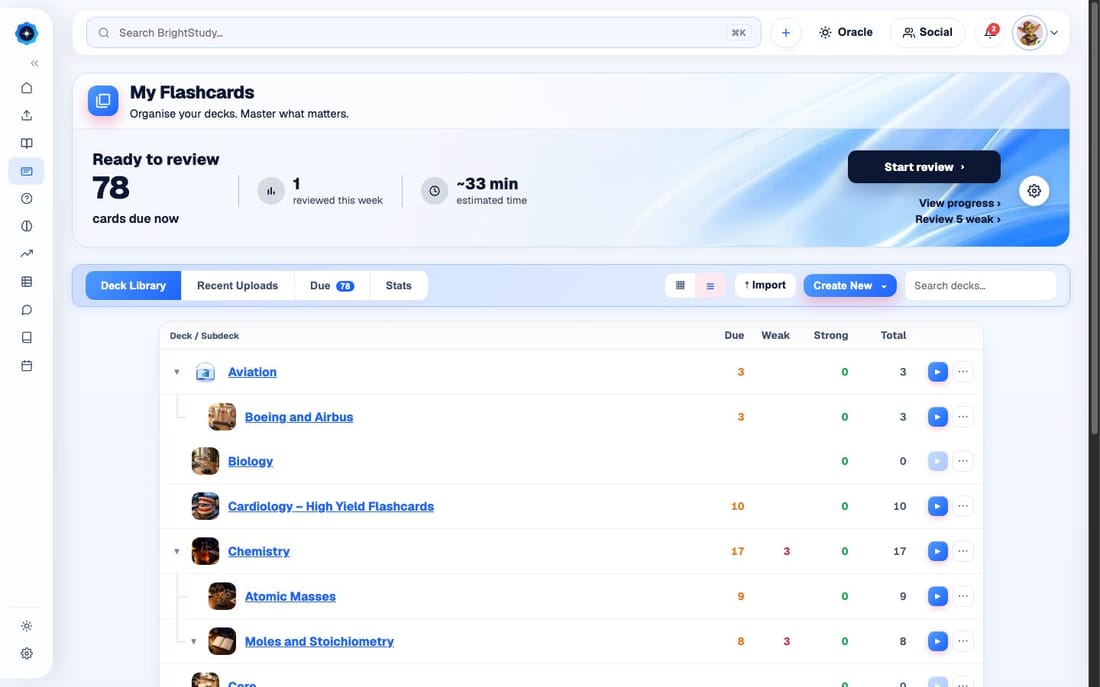
BrightStudy is designed for independent learners from secondary school upwards, but parents and teachers can use it to support younger children. On the free plan you can create unlimited flashcards and multiple-choice questions by hand, ideal for times tables, spelling lists or key facts from a topic.
You can also upload worksheets, homework sheets or photos of notes and turn them into an organised Study Doc. For primary-age children we recommend sitting alongside them: choose a topic from their year group, run a short flashcard round together and talk through anything they got wrong.
Primary education in Wales, Scotland and Northern Ireland
This guide follows the National Curriculum in England. Wales follows the Curriculum for Wales, organised into six areas of learning and experience, with online personalised assessments in reading and numeracy instead of SATs. Scotland follows the Curriculum for Excellence, with primary school running from P1 to P7. Northern Ireland has its own curriculum, starting with a two-year Foundation Stage followed by Key Stages 1 and 2.
Much of the underlying content, such as reading, number, science and the wider world, is similar across the UK, so the home learning methods on this page apply wherever your child goes to school.
KS1 and KS2: frequently asked questions
What is the difference between KS1 and KS2?
Key Stage 1 covers Years 1 and 2 (ages 5 to 7). Key Stage 2 covers Years 3 to 6 (ages 7 to 11). Both follow the National Curriculum in England, with SATs at the end of Year 6.
What is a good SATs score?
Scaled scores run from 80 to 120. A score of 100 or above means your child has met the expected standard. Many schools describe scores of around 110 or more as high, but every child’s progress matters more than a single number.
When are Year 6 SATs?
KS2 SATs are sat over one week in May, and results are sent to parents in July.
Are Year 2 SATs still compulsory?
No. Since the 2023–24 school year, KS1 tests are optional for schools in England, though many still use them to support teacher assessment.
What is the Year 4 multiplication tables check?
An on-screen check in June of Year 4 with 25 questions on times tables up to 12 × 12, each with six seconds to answer. There is no pass mark; it helps schools see who needs more support.
What is the phonics screening check?
In June of Year 1, children read 40 words aloud to their teacher, including some made-up words. Children who do not meet the expected standard retake the check in Year 2.
Which subjects do children study at KS2?
English, maths, science, art and design, computing, design and technology, geography, history, a modern foreign language, music and PE, plus religious education and relationships and health education.
How much homework should a primary child do?
It varies by school, but short daily reading plus occasional maths or spelling practice is typical. Little and often is more valuable than long sessions.
What is the expected standard at KS2?
It is the level the Department for Education expects most children to reach by the end of Year 6. In the reading, grammar and maths tests it means a scaled score of 100 or more; in writing it is judged by teachers against a framework.
Do SATs results affect secondary school places?
No. Secondary school places are allocated through your local authority’s admissions process, usually decided before SATs are taken. Some secondary schools use SATs results to help plan teaching groups.
How can I help my child with reading comprehension?
Read together often and talk about the text: ask why characters act as they do, what words mean in context, and what clues point to what happens next. These are the inference and vocabulary skills the KS2 reading paper tests.
What is SPaG?
SPaG stands for spelling, punctuation and grammar. In Year 6 it is tested in two papers: a questions paper on grammar and punctuation, and a spelling test of 20 words.
How long should a primary child practise each day?
Ten to fifteen minutes of focused practice, plus reading, is plenty for most children. Short sessions keep it positive and are more effective than long ones.
Should I buy SATs revision guides?
They can help with familiarity, but they are not essential. Daily reading, regular times tables practice and a few practice questions in the format of the real papers are usually enough.
Can I make flashcards for my child on BrightStudy?
Yes. On the free plan you can create unlimited flashcards and multiple-choice questions by hand, for example for times tables or spelling lists, and study them together.
Is BrightStudy designed for children?
BrightStudy is built for independent learners from secondary school upwards. For primary-age children it works best as a tool for parents and teachers to use alongside them.
What do children learn in Year 3?
In maths, numbers to 1,000, the 3, 4 and 8 times tables and simple fractions; in English, reading for meaning and writing in paragraphs; and in science, topics such as rocks, light, forces and magnets, plants and animals including humans.
What is the Reception baseline assessment?
A short, practical check in the first six weeks of Reception that looks at early language, communication, literacy and maths. It is used to measure school progress, and no scores are shared as a judgement of individual children.
Do all schools follow the National Curriculum?
Local authority maintained schools must. Academies and free schools are not required to, but most base their curriculum on it and all must offer a broad and balanced curriculum.
What happens in Year 6 after SATs?
Many schools use the summer term for projects, performances, trips and preparation for secondary school, including transition days at the new school.
Other stages of UK study
Build good learning habits early
Make a set of times-table or spelling flashcards in minutes and practise together for ten minutes a day.