Exam practice written for your exam
Tell BrightStudy what you are studying and which exam you are sitting. Every multiple-choice question it writes from your notes matches that level, wording and style, and every option comes with its explanation.

Built around you
Questions that know which exam you are sitting
When you sign up you tell BrightStudy where and what you study. That profile goes into every question it writes, so a GCSE student and a doctor sitting a specialist exam get different questions from the same topic.
Country
UK, US or Australian spelling and the education terms you are used to.
Level and qualification
Sets the vocabulary, assumed knowledge and depth, from GCSE command words to postgraduate reasoning.
Course, year and specialty
Shapes how long and how demanding each question is.
Target exam
More than 30 named exams have their own style notes, including MRCP, USMLE, PLAB, SQE, GPhC and NCLEX.
Subjects and exam boards
Questions use each board’s specification terminology and question style.
Practise what you need, when you need it
Start a session from whatever is most useful right now. Hover a card to see what each one gives you.

01
Due today
The questions spaced repetition has scheduled for today, across all your decks.

02
A whole deck
Work through every question in one subject or subdeck, in order or shuffled.

03
One Study Doc
Practise just the questions made from one Study Doc, straight from the doc itself.

04
Unfiled questions
Questions you have not put in a deck yet, so nothing gets left behind.
One best answer, every option explained
Each question has five options and one single best answer. “All of the above” and “none of the above” are never used. When you answer, you see why the right option is right and why each wrong option is tempting but wrong, so a mistake teaches you something.
Every question is tagged by
Example question · A-level Biology
Species X lives in a desert and produces very concentrated urine. Species Y lives beside fresh water. Which feature of species X’s kidneys best explains the difference?
The options
- A. A larger Bowman’s capsule
- B. A longer loop of Henle relative to kidney size
- C. Fewer collecting ducts
- D. A shorter proximal convoluted tubule
- E. A higher glomerular filtration rate
Why B is right
- A longer loop of Henle builds a steeper sodium gradient in the medulla. More water is then reabsorbed from the collecting duct by osmosis, so the urine is more concentrated.
Why not the others
- A: capsule size affects filtration, not how concentrated the urine becomes.
- C: fewer collecting ducts would mean less water reabsorbed, not more.
- D: the proximal tubule reabsorbs a fixed share of filtrate; it does not set the final concentration.
- E: filtering more fluid does not by itself concentrate the urine.
Written in the style your exam actually uses
Questions stay single best answer, but their scope, scenarios and wording follow your exam. These are some of the style notes BrightStudy works to, by field.
Also tuned for
School
- GCSE: exam-board command words such as state, describe, explain and evaluate, with mark-scheme style answers.
- A level: deeper analysis, application and evaluation.
- IB: IB command terms and markband-based answers.
- AP: College Board course frameworks.
Medicine
- MRCP: best-of-five clinical vignettes on diagnosis, investigation and management.
- USMLE: long clinical vignettes that join basic science to the presentation.
- PLAB: common UK clinical scenarios, guidelines and ethics.
- UKMLA: mapped to the MLA content map, with an emphasis on safe patient care.
Dentistry
- MFDS and MJDF: clinical dentistry, oral pathology, pharmacology and human disease.
- ORE: aligned to UK GDC learning outcomes and safe-practice standards.
- ADC: aligned to Australian professional standards.
Law
- SQE: applying the law of England and Wales to realistic client scenarios.
- Bar exams: issue spotting and rule application.
- LSAT: logical reasoning, analytical reasoning and reading comprehension.
Pharmacy and nursing
- GPhC: safe pharmacy practice, including calculation questions.
- NAPLEX: patient-case pharmacotherapy and safe medication use.
- NCLEX: prioritisation, delegation and safe care.
Every question set is checked before you see it
Questions are written from your own material, then checked twice: once automatically for answer giveaways and once by a separate AI reviewer that did not write them.
Written to your profile
Questions come from your notes, at your level and in your exam’s style. They are never presented as official or past-paper questions.
Automatic giveaway check
Flags the patterns that let you guess without knowing:
- The correct option is much the longest
- Absolute words only in wrong options
- Only the right answer is hedged
- The answer repeats the stem
Independent AI review
A separate reviewer checks each question against 14 criteria and passes, revises or rejects it.
Answer position shuffled
The correct letter is shuffled, and options are shuffled again every time you practise.
Help at every step, without giving it away
Ask for a hint before you answer. Got it wrong? Find out exactly why, go deeper, or get a memory trick so it sticks next time.
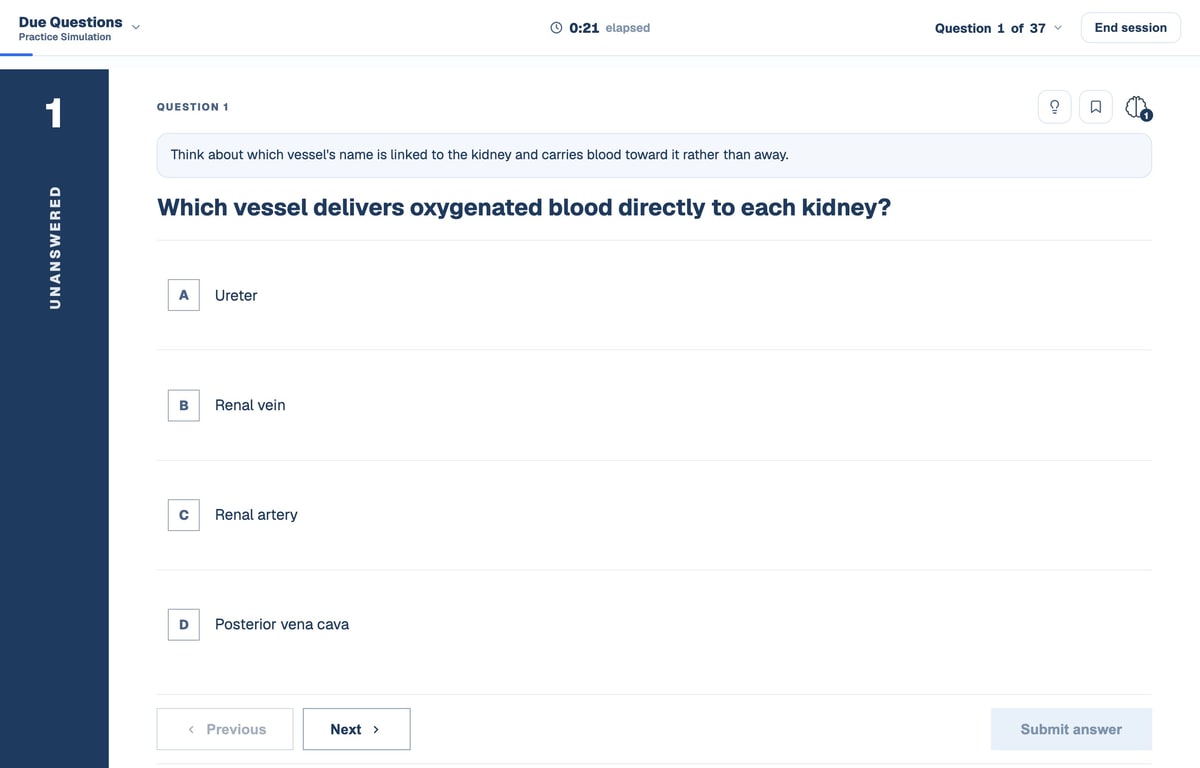
Hint
Before you answer. A nudge, not the answer.
Think about where water is drawn out of the urine, not where it is first filtered.
Why was I wrong?
After a wrong answer, aimed at your choice.
Bowman’s capsule sets how much is filtered. Concentration is set later, by the gradient the loop of Henle builds.
Explain more
A deeper explanation of the idea behind the question.
The loop of Henle is a countercurrent multiplier: the longer it is, the steeper the sodium gradient in the medulla.
Memory trick
A short hook so it sticks next time.
“Long loop, little loo”: a longer loop of Henle means less water lost.
Learn as you go, or practise under exam conditions
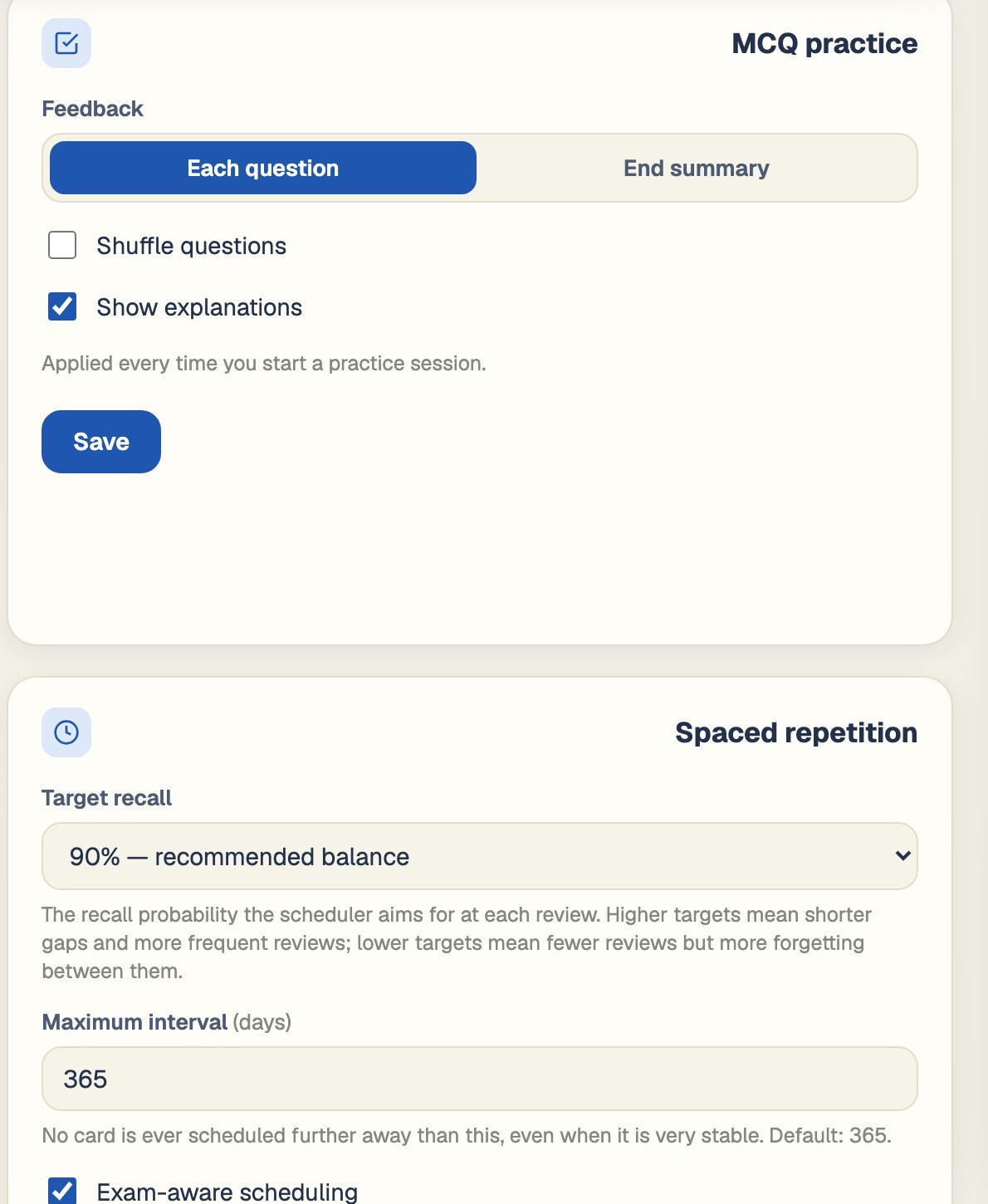
Set how practice feels in Settings, and it applies every time you start a session.
Feedback each question
Choose it if
You are learning a topic for the first time.
You get
The answer and its explanation straight after every question.
See how it works ↓Show explanations
Choose it if
You want to know why, not just what.
You get
The rationale for the right answer and each wrong one.
See how it works ↓Shuffle questions
Choose it if
You know the order too well.
You get
Questions in a new order every session. Options are always shuffled.
See how it works ↓End summary
Choose it if
You want to test yourself without interruptions.
You get
No feedback until the end, then a full review of every answer.
See how it works ↓From your notes to exam-ready in five steps
Most question sets are ready a couple of minutes after you upload.
- 1
Upload your notes
Slides, PDFs, handwritten pages, recordings or a YouTube lecture.
- 2
Tick MCQs
Add questions to any upload, or generate them later from a Study Doc.
- 3
Written and checked
Questions are written for your exam, then checked twice before they are saved.
- 4
Practise
Due today, by deck or by doc, with hints and explanations when you need them.
- 5
Review
A session summary and a question-by-question review show what to work on next.
Practice sessions that teach as you go
Practise what is due today, a whole deck, or the questions from one Study Doc. Help is there when you are stuck, and every answer is reviewed at the end.
Ask for a hint first
Stuck? Get a nudge before you answer. After answering, ask why you were wrong, for a deeper explanation or for a memory trick.
Feedback your way
Choose feedback after each question or a summary at the end, and whether to shuffle and show explanations.
See what is due
Your MCQ library shows what is ready to practise, deck by deck.
Spaced repetition →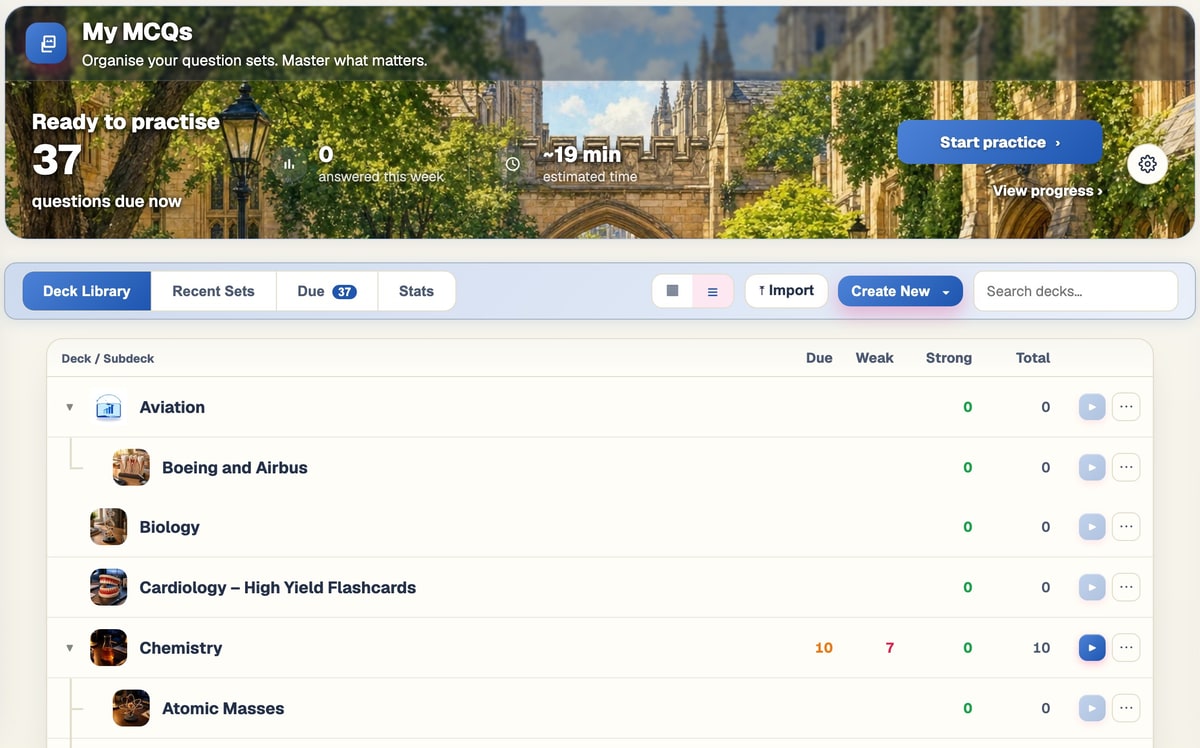
Questions that change
Answer a question correctly twice in a row and a fresh version is written, testing the same idea a new way.
Adaptive MCQs →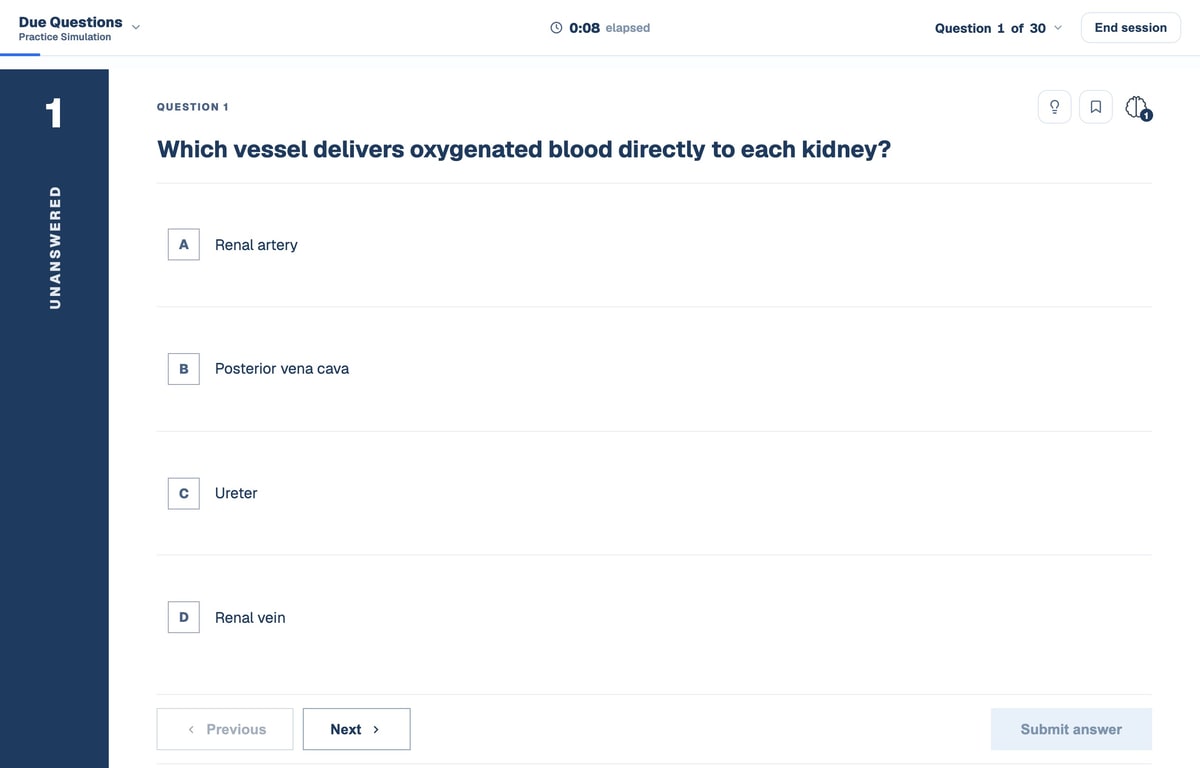
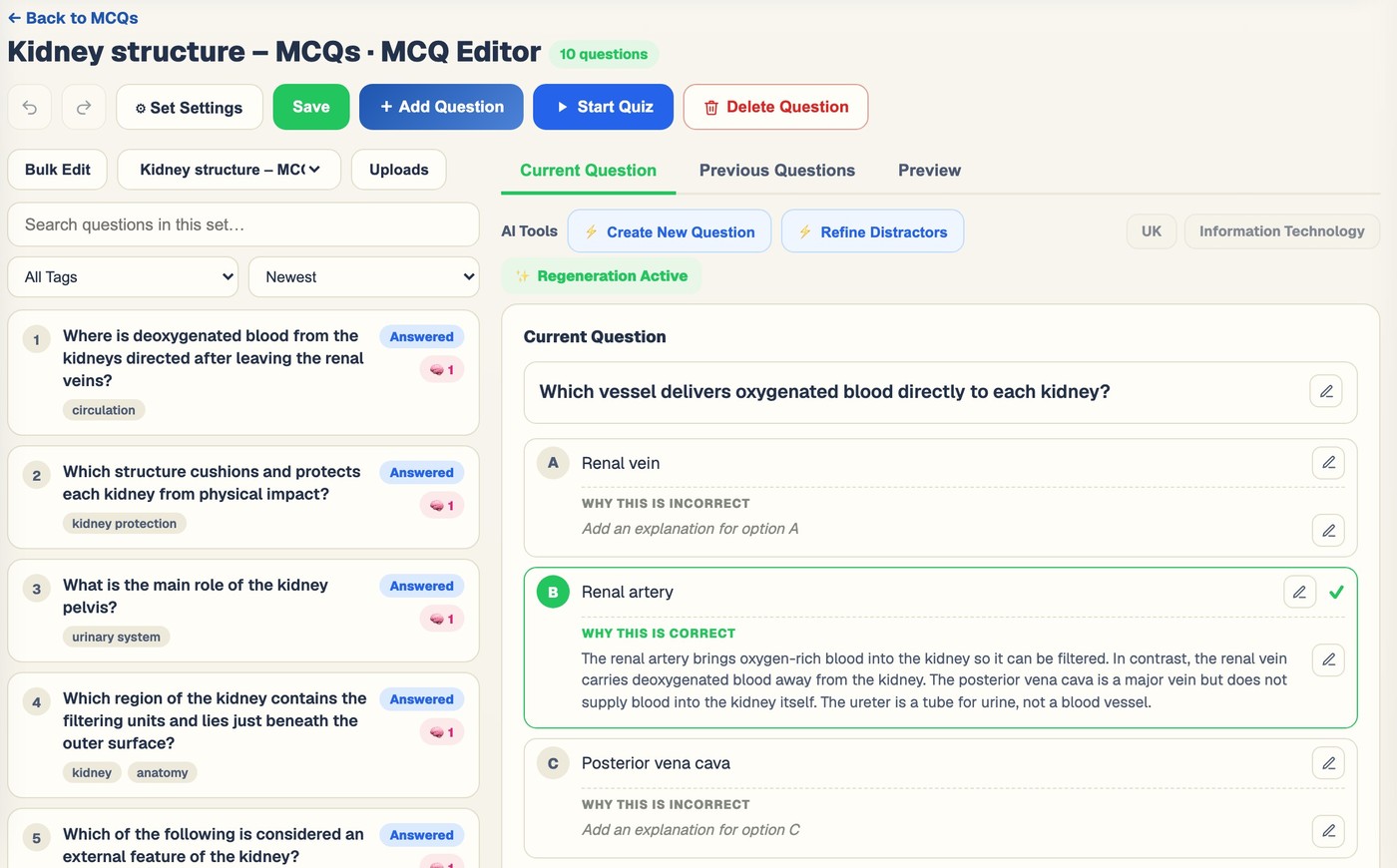
Edit any question in the MCQ editor
Every question set opens in a two-panel editor. Change the wording, the options or the explanations, add your own questions, and use AI tools to create a new question or refine the wrong options so they are more plausible. Previous Questions shows the earlier versions of each question as it changes.
Questions, answered
How BrightStudy writes, checks and runs practice questions for your exam.
Try BrightStudy free and upload your first document, or email us at support@brightstudy.ai.
Are these real past-paper questions?
How does BrightStudy know my exam?
Which exams does it support?
What format are the questions?
How are questions quality-checked?
Can I edit or write my own questions?
Is there a timer?
Can I flag questions to come back to?
What happens when I keep getting a question right?
Is exam practice free?
Explore the rest of BrightStudy
Move across the strips · tap one to explore
 FlashcardsActive recall with focused question-and-answer cards.Learn more →
 Deep LearningExplain your understanding and get feedback.Learn more →
 AI TutorsAsk questions and explore difficult concepts.Learn more →
 AI ExplanationsHelp understanding answers and remembering ideas.Learn more →
 Spaced RepetitionRevisit your learning with scheduled reviews.Learn more →
 Study DocsStructured notes you can read, edit and study from.Learn more →
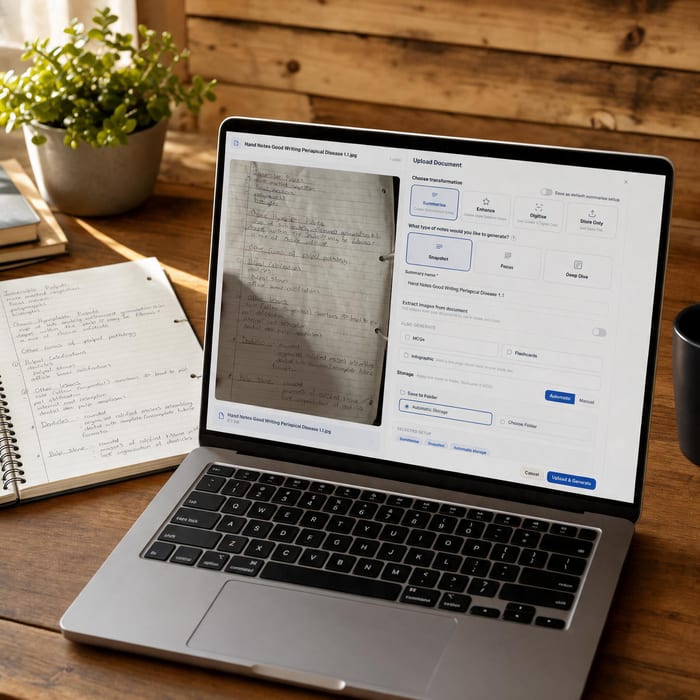 Document UploadsPDFs, slides and typed or handwritten notes.Learn more →
Practise like it is exam day.
Turn your notes into exam-style questions with an explanation for every option, checked before you see them.
- Free plan to get started
- Study Docs, flashcards and MCQs
- Runs in your browser